

The year is 2026, and while you might still be using a classical computer to read this, the world of quantum computing is no longer a distant dream. It’s a rapidly evolving field that has moved out of the lab and into the real world, promising to solve problems that are simply impossible for even the most powerful supercomputers today.
Quantum technology holds immense potential, from revolutionizing drug discovery to transforming financial modeling. But what exactly is quantum computing, and why is everyone talking about it now? This article will break down the essential information you need to understand this revolutionary technology, its key breakthroughs in 2026, and what it means for our future..
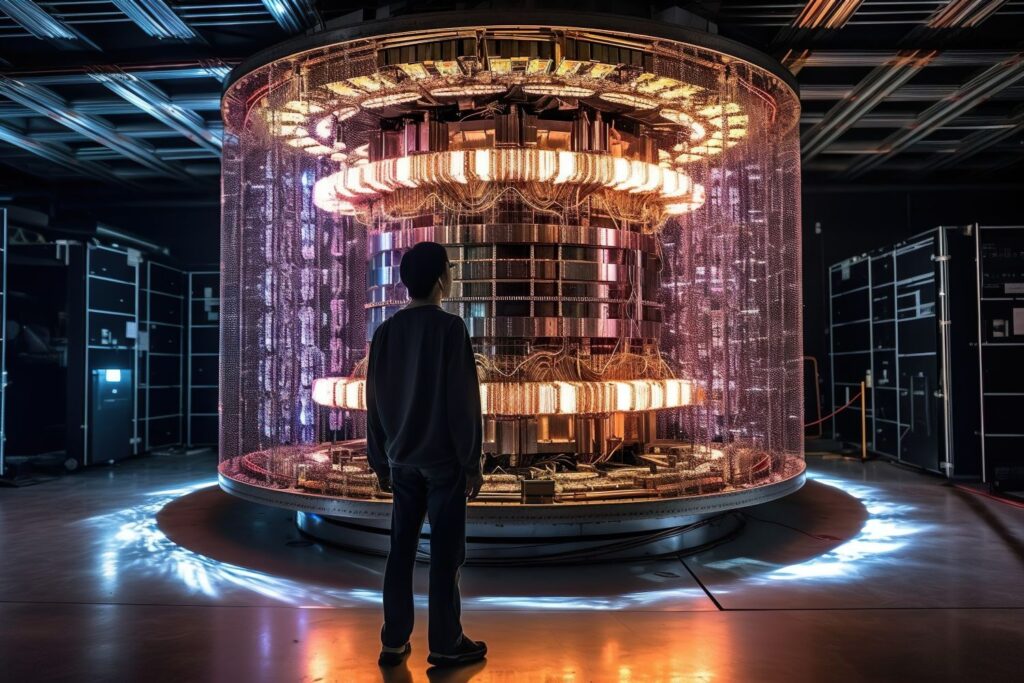
Quantum Computing for Beginners: How It Works
At its core, quantum computing is a new way of processing information. Think about the computer you’re using right now. It uses bits to store and process data, with each bit representing either a 0 or a 1. It’s a simple, binary system that has powered the digital age.
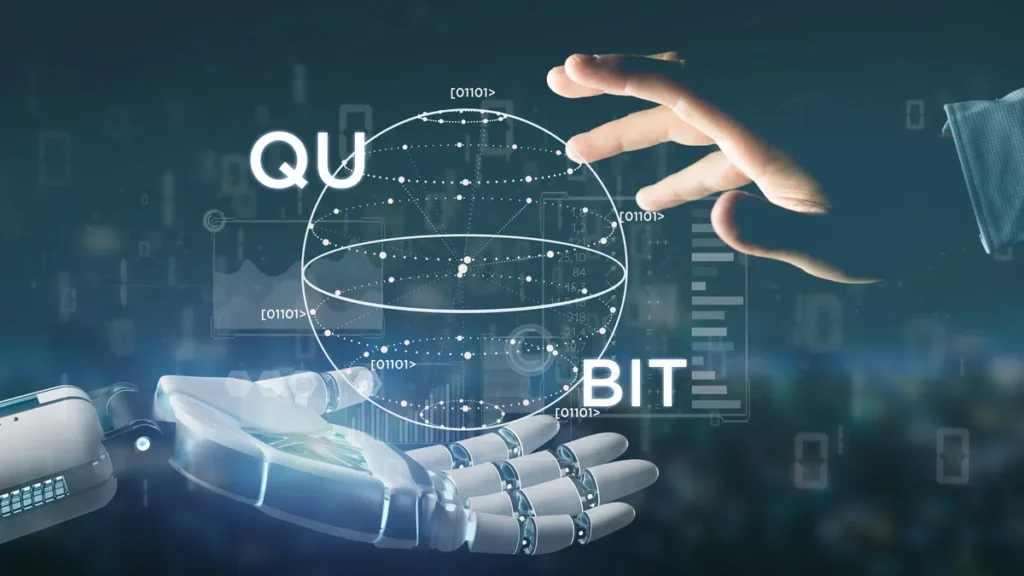
A quantum computer, however, uses quantum bits, or qubits. This is where things get interesting. Thanks to the strange rules of quantum mechanics, a qubit isn’t limited to just 0 or 1. It can exist in a superposition, occupying both states simultaneously. This means that a single qubit can represent a vast amount of information simultaneously.
Furthermore, qubits can become entangled, meaning the state of one instantly influences the other regardless of how far apart they are. This combination of superposition and entanglement allows quantum computers to perform an exponentially greater number of calculations in parallel. While adding more bits to a classical computer doubles its processing power, adding qubits to a quantum computer increases its power exponentially.
Quantum Computing vs. Classical Computing: A Simple Analogy
To better understand the difference, imagine trying to find your way through a giant maze.
- A classical computer is like one person exploring every possible path sequentially. It’s a methodical, but slow, process. It will eventually find the correct path, but it might take a very long time.
- A quantum computer, on the other hand, is like having countless versions of yourself, all walking down every path in the maze at the same time. This is the power of superposition.
All these versions are interconnected through entanglement, allowing them to share information instantly. They can explore the entire maze simultaneously and find the correct path almost instantaneously. This simple analogy highlights why quantum computing vs. classical computing is not a competition, but a partnership. Quantum computers won’t replace your laptop for tasks like writing emails or browsing the web; instead, they’ll serve as powerful tools for specialized, complex problems
2026: A Pivotal Year and Key Industry Trends
Building on the momentum of the International Year of Quantum Science and Technology 2026, this year has seen the focus shift from quantum advantage beating a classical computer at a math puzzle to “quantum utility” (solving a real-world problem.
Major breakthroughs in Logical Qubits and Error Correction have been the key trends of 2026. For years, decoherence where environmental noise breaks the quantum statewas a major hurdle. However, companies like IBM and Google have now demonstrated “fault-tolerant” operations on over 1,000-qubit systems, significantly reducing error rates.
Another major trend is the rise of Hybrid Quantum-Classical Algorithms. We’re seeing more on-premises quantum deployments and increased collaboration between hardware and software companies to develop full-stack solutions. Businesses in the logistics and energy sectors are beginning to realize the potential of these machines for real-world supply chain optimization.
Breaking Down the Hype: Real-World Applications of Quantum Computing
While a universal quantum computer is still maturing, researchers and businesses are already finding practical uses for today’s machines:
- Drug Discovery and Materials Science: Simulating complex molecules is a monumental task for classical computers. Quantum computers can model these interactions with unprecedented accuracy, potentially accelerating the discovery of new medicines and creating more efficient batteries.
- Financial Modeling: The finance industry is a hotbed of quantum innovation. Quantum computers are being used to solve complex optimization problems, such as real-time risk analysis and fraud detection, in a fraction of the time.
- Artificial Intelligence: Quantum machine learning is an emerging field that could supercharge AI. Quantum computers can analyze massive datasets in novel ways, enabling more advanced and efficient AI models than ever before.
- Cryptography and Cybersecurity: On the flip side, the power of quantum computers poses a major threat to current encryption. As a result, a massive push is underway to implement quantum-safe” encryption to protect our digital infrastructure. You can learn more about this from the National Institute of Standards and Technology (NIST), the authority in developing post-quantum cryptography standard
For more in-depth analysis on how this technology is impacting various industries, you might find a related article on our main site, Deep Dive Insight, to be an excellent resource. We believe in staying ahead of the curve, and our team is constantly exploring how these technological leaps will shape our world.
The Major Players: Best Quantum Computing Companies 2026
The competition to build the first truly useful quantum computer is fierce. Tech giants like IBM, Google, and Microsoft are all investing billions. IBM’s quantum roadmap remains particularly aggressive, with their Quantum System Two providing stable, modular environments for researchers. Meanwhile, companies like IonQ, PsiQuantum, and Quantinuum are making significant strides with trapped-ion and photonics technology. A deeper look at the rapid pace of innovation can be found in resources from leading tech institutions like MIT Technology .
Quantum Computing Education Deals 2026
While building a quantum computer isn’t a DIY project, learning about the field is more accessible than ever. Many educational platforms are offering discounts on courses and Quantum SDK certifications like Qiskit or Azure Quantum. You can find the latest coupons and deals on quantum computing education and software by visiting our dedicated coupon site at deepdiveinsight. Don’t miss out on these seasonal deals to kickstart your journey into this fascinating world.
The Future is Now: What to Expect Next
The road to a fully functional, fault-tolerant quantum computer is still long, but the progress we’re seeing in 2026 is undeniable. As error rates continue to fall and qubit counts rise, we can expect to see an even greater push toward specialized quantum applications. The focus will shift from simply demonstrating quantum advantage to building machines that can provide a real-world, commercial advantage. The coming years will be defined by an exciting interplay between hardware innovation, software development, and the integration of quantum systems into our existing technological infrastructure.
Frequently Asked Questions
Will quantum computers replace classical computers for everyday tasks?
No, quantum computers are not designed to replace classical computers for tasks like web Browse or word processing. They are specialized tools for solving incredibly complex problems that are beyond the reach of traditional machines.
What is a qubit and how is it different from a bit?
A bit in a classical computer can only be a 0 or a 1. A qubit, or quantum bit, can exist in a state of superposition, meaning it can be both a 0 and a 1 simultaneously.
Is quantum computing a threat to cybersecurity?
Eventually, yes. The power of quantum computers could break many of today’s common encryption methods. This has led to a global effort to develop new “quantum-safe” cryptographic standards to protect our data.
When will quantum computing be mainstream?
While a fully fault-tolerant quantum computer is still years away, we are already seeing the emergence of commercial applications and increased accessibility through cloud services. The technology is no longer purely theoretical.