
The internet has come a long way since its inception. From the static pages of Web 1.0 to the interactive social web of Web 2.0, we’ve seen incredible transformations. Now, in 2026, as we navigate a landscape dominated by Generative AI, Spatial Computing, and the Autonomous Internet of Things AIoT, a new paradigm is here: Web 4.0.
But what exactly is Web 4.0, and how is it shaping our current reality?
This isn’t just another buzzword. Web 4.0 represents a fundamental shift in how we interact with technology and each other. It’s about creating an intelligent, symbiotic, and seamless digital environment that anticipates our needs and acts on our behalf. Think of it as a Personal AI Agent that lives in the cloud, constantly learning and adapting to your preferences, making your life easier and more efficient.
The transition to Web 4.0 is driven by advancements in several key areas. The rise of Large Action Models (LAMs) allows systems to not just “chat” but to actually execute tasks on your behalf. The proliferation of AIoT devices means our environments are now “aware,” and the maturation of Spatial Computing (via headsets like the Apple Vision Pro and Meta Quest) is finally blurring the lines between the physical and digital worlds..
Web 4.0 vs Web 3.0: Exploring the Next Evolution of the Internet
To truly appreciate what Web 4.0 promises, it’s helpful to look back at where we’ve been.
- Web 1.0 (The Read-Only Web): The early days of the internet were all about static content. Websites functioned mostly as static digital brochures, offering minimal interactivity. Think of simple HTML pages and early search engines. This was the era of dial-up modems and Geocities.
- Web 2.0 (The Social Web): This phase brought a major shift toward user-generated content and interactive social platforms. Think of platforms like Facebook, YouTube, and Wikipedia. The focus was on collaboration, sharing, and community. This is the internet most of us know and use today.
- Web 3.0 (The Semantic Web): The current phase of the internet, Web 3.0, is about making data more structured and machine-readable. It’s about enabling computers to understand the meaning of information, not just the keywords. This has led to more personalized search results, smarter recommendations, and the rise of decentralized technologies like blockchain.
- Web 4.0 (The Symbiotic/Intelligent Web): Takes this a step further. While Web 3.0 focuses on ownership and data structure, Web 4.0 is about intelligence and agency. It is a “Live Web” where the internet acts as a proactive assistant that integrates seamlessly into your physical reality.
How is Web 4.0 Changing Our Daily Lives in 2026?
The practical implications of Web 4.0 are far-reaching. We are moving away from “searching” for answers and toward being “presented” with solutions.
- Personalized Healthcare: In 2026, your wearable doesn’t just track your steps; it detects micro-fluctuations in your temperature and heart rate to predict a flu 48 hours before you feel it, automatically ordering a vitamin-rich meal via a delivery drone.
- Proactive Smart Homes: Your home is now a truly intelligent ecosystem. It doesn’t just turn on the lights; it adjusts the spectrum of light to improve your circadian rhythm based on your last night’s sleep quality.
- Hyper-Personalized Education: Students now use AI Tutors that create real-time VR simulations of historical events, adapting the complexity of the lesson to the student’s immediate engagement levels.
For a more comprehensive look at the technologies driving this change, you might find this article on the deepdiveinsight insightful. The transition to Web 4.0 is underpinned by these technological advancements.
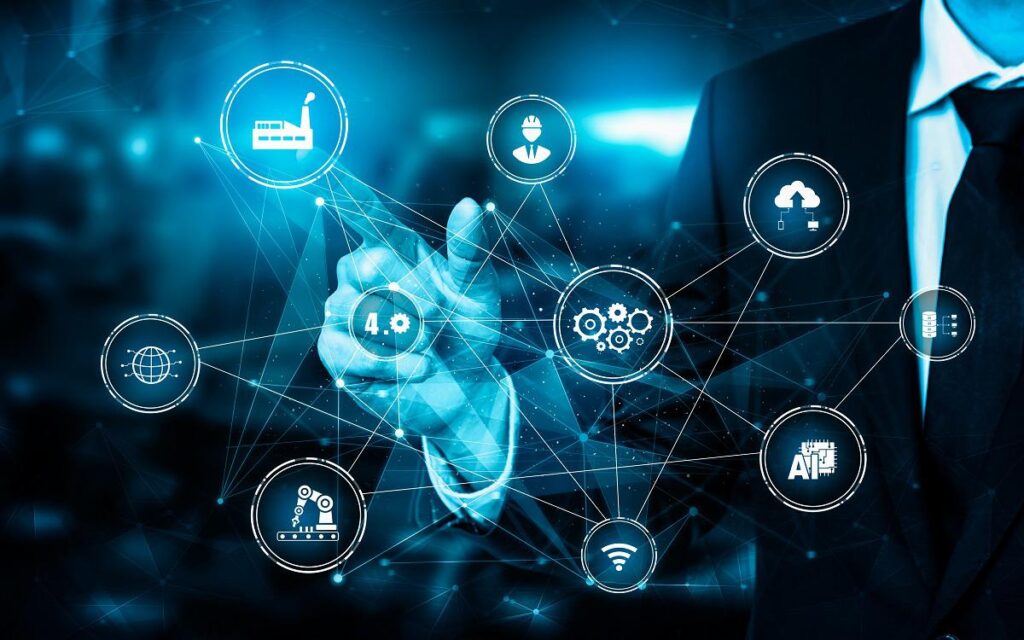
Essential Web 4.0 Technologies: What Role Does AI Play?
Artificial intelligence is not just a component of Web 4.0; it’s the central nervous system. AI will be the engine that powers the intelligent and responsive nature of the next internet. From natural language processing that allows us to communicate with machines more naturally to machine learning algorithms that personalize our experiences, AI is the key to unlocking the full potential of Web 4.0.
In fact, some experts argue that Web 4.0 could be described as the “symbiotic web,” where humans and machines work together in a seamless, collaborative fashion. This future will require robust ethical frameworks and a new level of data privacy, as these intelligent systems will have access to an unprecedented amount of personal information. It’s a delicate balance between convenience and privacy that will need to be carefully managed.
For a deeper dive into the ethical considerations of AI, this report from The Pew Research Center offers some excellent insights.
Navigating the New Digital Frontier: Challenges and Opportunities
The arrival of Web 4.0 brings with it a host of new challenges and opportunities. On one hand, the increased efficiency and personalization will be transformative. On the other hand, we’ll need to address potential issues like data security, algorithmic bias, and the digital divide.
As we move forward, businesses and individuals will need to adapt. For businesses, Web 4.0 presents a chance to create more personalized and effective customer experiences. For individuals, it will mean embracing new technologies while remaining vigilant about data privacy and digital literacy.
Exclusive Deals and Coupons for Emerging Tech
As the world of Web 4.0 begins to take shape, staying ahead of the curve with new technology can be expensive. From smart home gadgets to VR headsets, the latest innovations come at a cost. That’s why we’ve partnered with some of the leading tech providers to bring you exclusive deals. Be sure to check out our dedicated coupons site at deepdiveinsight for discounts on the latest Web 4.0-ready devices and software. We update our deals weekly, so you’ll always have access to the best prices.
Conclusion: The Future is Here, and It’s Intelligent
Web 4.0 is not a distant future it’s an evolution that’s already underway. It’s the convergence of AI, IoT, and immersive technologies to create a web that is truly intelligent, intuitive, and seamlessly integrated into our lives. While there are challenges to address, the opportunities for innovation and positive change are immense. As we continue to build this new digital frontier, one thing is certain: the next internet evolution is here, and it promises to be more powerful and transformative than anything we’ve seen before.
FAQs
What distinguishes Web 3.0 from Web 4.0?
Web 3.0 focuses on a decentralized and semantic web, while Web 4.0 takes this further by integrating AI to create an intelligent and symbiotic web that anticipates user needs.
Is Web 4.0 already here?
Elements of Web 4.0, such as AI-driven recommendations and smart devices, are already present, but the full vision of a truly intelligent and symbiotic web is still emerging.
What technologies are essential for Web 4.0?
Key technologies include artificial intelligence (AI), machine learning, the Internet of Things (IoT), and immersive technologies like augmented and virtual reality (AR/VR).
How will Web 4.0 affect data privacy?
With increased data collection and analysis, data privacy will become even more critical. New ethical frameworks and robust security measures will be essential to protect user information.