
The digital landscape is a constantly evolving beast, and for CEOs, staying ahead isn’t just about keeping up it’s about anticipating the next big wave. We’re not just talking about incremental improvements here; we’re on the cusp of a significant digital shift that promises to redefine how businesses operate, interact with customers, and innovate. Ignoring these transformations isn’t an option; embracing them will be the hallmark of future-proof leadership.
This isn’t about chasing every shiny new gadget. It’s about understanding the underlying currents that will reshape industries and equip your organization with the foresight and agility to thrive. So, what exactly is this next digital shift, and what do you, as a CEO, need to know to navigate it successfully? Let’s dive in.
The AI Tsunami: More Than Just Chatbots
Artificial Intelligence (AI) has been a buzzword for years, but the “next digital shift” sees AI moving from a specialized tool to a pervasive force across all business functions. We’re talking about AI that’s more autonomous, more integrated, and more capable of complex decision-making.
Think beyond customer service chatbots. We’re seeing AI systems that can:
- Predict market trends with astounding accuracy: Leveraging vast datasets to forecast demand, identify emerging opportunities, and even anticipate competitive moves.
- Automate complex workflows: From supply chain optimization to personalized marketing campaigns, AI is streamlining processes that once required significant human intervention.
- Enhance decision-making: Providing real-time insights and recommendations, allowing leaders to make more informed choices with greater speed and confidence.
- Drive hyper-personalization: Creating bespoke experiences for customers at scale, from product recommendations to tailored content, fostering deeper engagement.
The challenge for CEOs will be to identify where AI can deliver the most significant strategic advantage within their specific industry and to invest in the right talent and infrastructure to support its deployment. It’s not just about adopting AI; it’s about integrating it intelligently. For a deeper dive into how AI is expected to impact various industries, you might find this article on The Future of AI in Business insightful.

Hyper-Automation: Beyond Basic Robotics
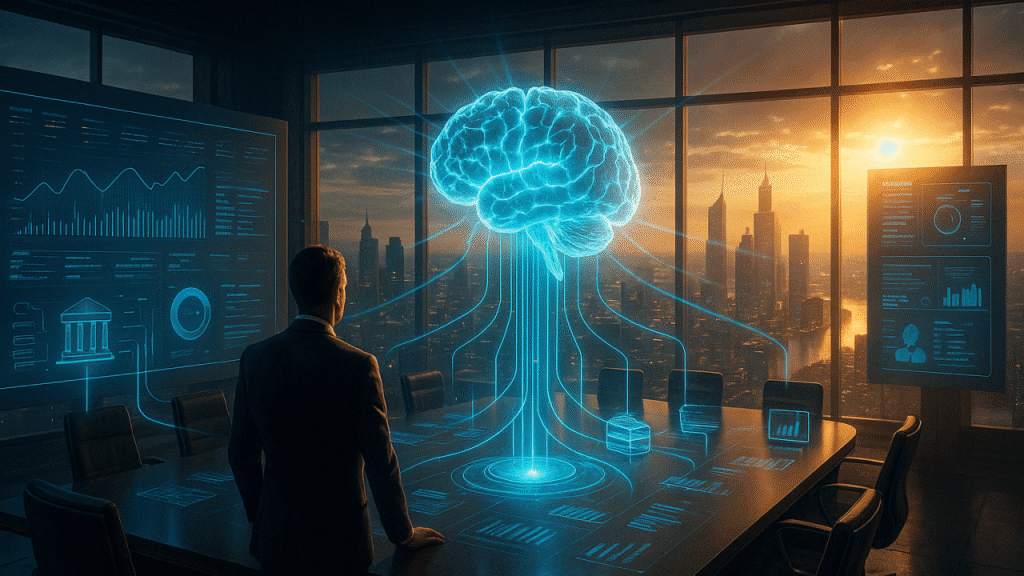
Hand-in-hand with the rise of advanced AI is the acceleration of hyper-automation. This isn’t just Robotic Process Automation (RPA) automating repetitive tasks. Hyper-automation combines AI, machine learning, RPA, and other emerging technologies to automate increasingly complex processes, often without human intervention.
Imagine entire operational sequences running seamlessly, driven by intelligent algorithms that learn and adapt. This can lead to unprecedented levels of efficiency, cost reduction, and scalability. For CEOs, this means:
- Reimagining operational models: Shifting from manual, process-heavy structures to agile, AI-driven workflows.
- Freeing up human capital: Employees can focus on higher-value, creative, and strategic tasks that truly leverage human ingenuity.
- Achieving faster time-to-market: Automating product development cycles, from design and prototyping to testing and deployment.
However, the ethical implications of hyper-automation, particularly concerning workforce displacement and the need for reskilling initiatives, will demand careful consideration and proactive planning from leadership.
The Decentralized Web and Blockchain’s Ascent
While often associated with cryptocurrencies, blockchain technology is maturing beyond its initial applications and poised to underpin a more decentralized internet, often referred to as Web3. This shift emphasizes user ownership of data, enhanced transparency, and greater security through distributed ledger technologies.
For businesses, blockchain offers the potential to:
- Revolutionize supply chain management: Providing immutable and transparent records of goods from origin to consumer, enhancing traceability and trust.
- Secure data and transactions: Offering a robust framework for secure data sharing and tamper-proof record-keeping, reducing fraud and cyber risks.
- Enable new business models: Facilitating tokenized economies, decentralized autonomous organizations (DAOs), and more equitable value exchange.
- Enhance digital identity management: Giving individuals greater control over their personal data and how it’s used.
CEOs need to explore how blockchain can enhance their existing operations, create new revenue streams, and build stronger trust with customers and partners. It’s less about speculative investments and more about leveraging its fundamental capabilities for security, transparency, and efficiency. You can delve deeper into the insights and trends shaping various industries by visiting Deep Dive Insight.
Quantum Computing: The Future’s Edge
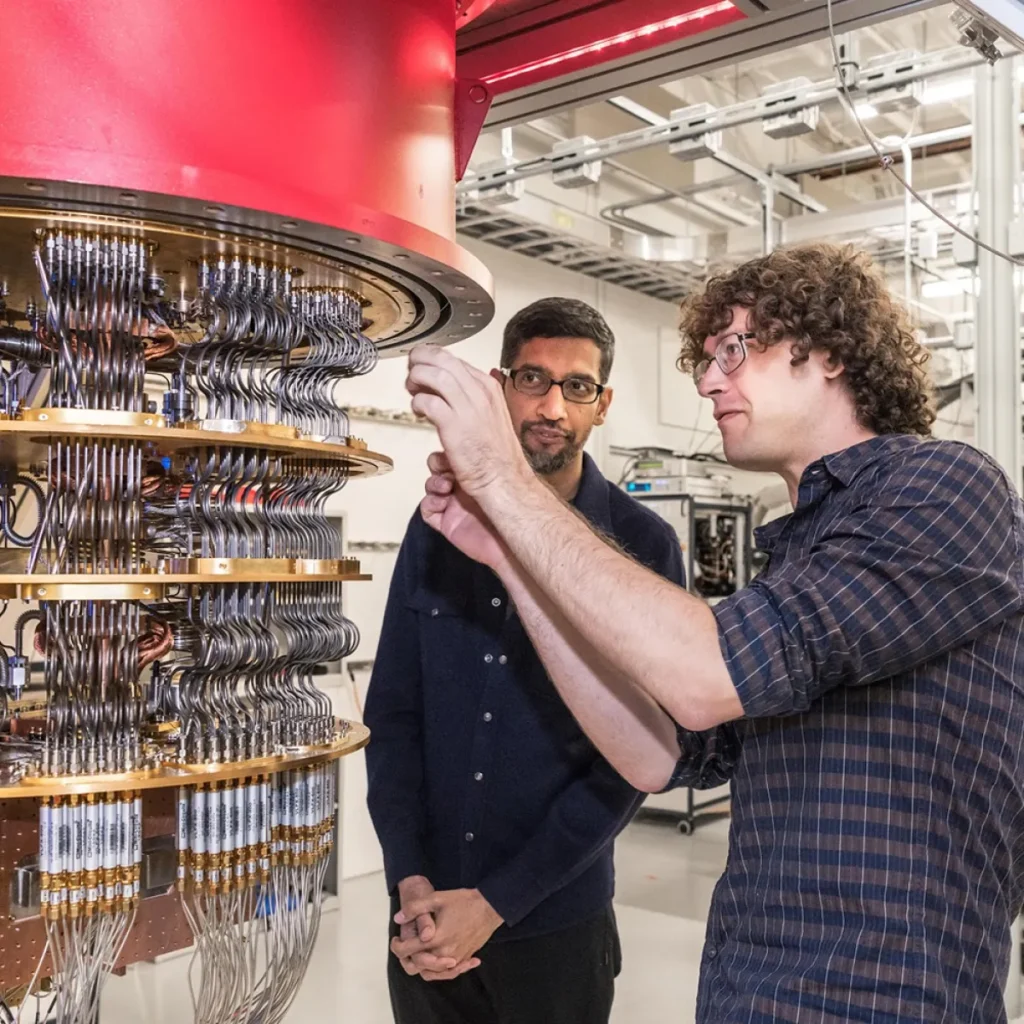
While still in its nascent stages, quantum computing is rapidly progressing and holds the potential to solve problems currently impossible for even the most powerful supercomputers. For now, it might seem like science fiction, but forward-thinking CEOs should already be on its radar.
Quantum computing promises to:
- Revolutionize complex problem-solving: From drug discovery and materials science to financial modeling and logistical optimization.
- Break current encryption standards: Necessitating a re-evaluation of cybersecurity strategies in the long term.
- Accelerate AI development: Enabling more sophisticated AI models and faster training times.
While widespread commercial application is still some years away, understanding the potential impact of quantum computing will be crucial for long-term strategic planning. Companies should start exploring potential use cases and consider investing in research partnerships or talent development in this cutting-edge field. For more detailed information on the economic impact and job creation potential of this field, consider reading reports from organizations like The Quantum Insider.

Cybersecurity’s Evolving Battleground
With every digital shift comes a corresponding evolution in cybersecurity threats. The increased interconnectedness, reliance on AI, and prevalence of decentralized systems mean that the attack surface for businesses is expanding dramatically.
CEOs must recognize that cybersecurity is no longer just an IT concern; it’s a fundamental business risk that requires board-level attention. Key considerations include:
- AI-powered threats: Malicious actors will leverage AI to create more sophisticated phishing attacks, malware, and autonomous hacking tools.
- Supply chain vulnerabilities: The interconnectedness of digital systems means a weakness in one partner’s security can expose the entire chain.
- Data privacy and compliance: Evolving global regulations like GDPR and CCPA, along with new ones emerging, demand robust data governance and privacy by design. Overlooking these may cause serious penalties and damage to reputation.
- Zero-trust architecture: Moving away from perimeter-based security to a model where no user or device is inherently trusted, requiring continuous verification.
Investing in advanced threat detection, incident response planning, and continuous employee training will be paramount. For businesses looking for tools to help with their digital transformation, including enhanced security, you might find valuable resources and offers at Deep Dive Insight .
The Human Element: Reskilling and Ethical Considerations
Amidst all this technological advancement, it’s easy to forget the most critical component: people. The next digital shift will profoundly impact the workforce, requiring a significant focus on reskilling and ethical AI deployment.
CEOs have a responsibility to:
- Invest in reskilling and upskilling programs: Preparing employees for new roles and equipping them with the skills needed to work alongside AI and automation. This isn’t just about technical skills; it’s also about fostering critical thinking, creativity, and emotional intelligence – uniquely human traits that AI can’t replicate.
- Foster a culture of continuous learning: Encouraging adaptability and a growth mindset throughout the organization.
- Establish ethical AI frameworks: Developing clear guidelines for the responsible and unbiased use of AI, addressing concerns around fairness, transparency, and accountability. This means involving diverse voices in the development and deployment of AI systems.
- Prioritize human-centric design: Ensuring that new technologies augment human capabilities rather than replace them, creating more engaging and fulfilling work experiences.
Preparing Your Business for What’s Next
The ‘next digital shift’ isn’t a one-time event, but a continuous evolutionary process. For CEOs, preparation means more than just technological upgrades. It involves a holistic approach that touches every aspect of the business:
- Strategic Vision: Clearly define how these emerging technologies align with your core business objectives and competitive advantages.
- Agile Mindset: Embrace experimentation and iterative development. The landscape is changing too fast for rigid, long-term plans.
- Talent Development: Invest heavily in attracting, retaining, and developing talent with the skills needed to navigate this new era.
- Data Governance: Establish robust frameworks for data collection, storage, analysis, and security, ensuring compliance and ethical use.
- Partnerships: Collaborate with technology providers, academic institutions, and even competitors to accelerate innovation and share insights.
The digital future is arriving faster than ever. By understanding these key shifts and proactively adapting, CEOs can position their organizations not just to survive, but to truly thrive in the coming years.
FAQs
What is the most significant technology driving the next digital shift?
Agentic AI. In 2026, we’ve moved from chatbots to Agents that independently manage supply chains and customer lifecycles, turning AI from a tool into a proactive digital workforce.
How will AI impact job roles in the coming years?
It creates Hybrid Roles. In 2026, the most valued skill is AI Orchestration the ability to manage a team of AI agents while providing the high-level strategy and empathy AI lacks.
Why is cybersecurity becoming even more critical now?
The AI-vs-AI arms race. Hackers use generative AI for deepfake phishing; businesses must counter with Self-Healing Networks and Zero-Trust 2.0 to stay resilient in 2026.
How can my company prepare for the ethical challenges of AI?
Implement Human in the Loop governance. In 2026, leading firms use algorithmic auditing to ensure transparency and prevent Black Box bias in autonomous decision-making.
Is quantum computing something I need to invest in right now?
For most, 2026 is for Quantum Readiness.Start migrating to Post-Quantum Cryptography PQC to protect your data before Q-Day renders current encryption obsolete.